 Skip to content
Scentera: an Arabic-first perfume shop in Egypt.
Six questions that find three scents, testers to try first, a passport for every batch and the real bottle in each scent's colour, with the back office that runs them.
Visit scentera.io
The problem
Scentera is a young perfume house in Tanta. It makes its own perfumes, ages each batch, and puts a free tester in every order. It sold only through Facebook and WhatsApp messages, with no catalogue in public. And most perfume shops expect a visitor to know the names of notes, or the famous perfume they are looking for.
What we built
A shop that starts from the person, not the bottle: in Arabic first, with English as complete as the Arabic.
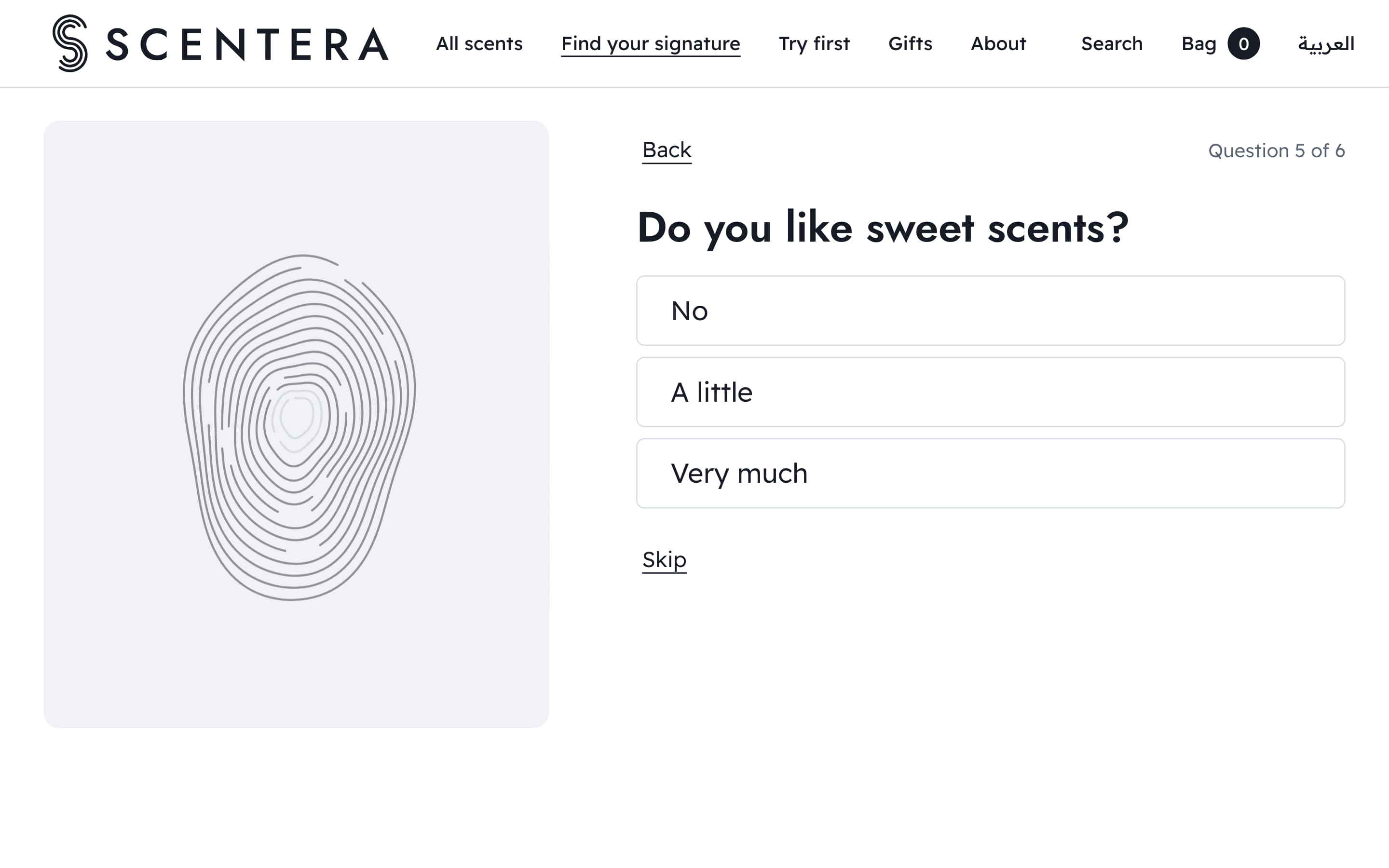
- A scent finder. Six short questions about the visitor, not about notes, choose three scents that fit, each with its reason, and draw the visitor's own scent fingerprint.
- Try first. The free tester in every order is chosen from the finder's result or the last order, and three of the finder's matches can be tried before a full bottle.
- A passport for every bottle. The batch on the label opens a page that says when the perfume was made, how many days it aged and when it was filled.
- Four families. Fresh, Elegant, Woody and Strong, each with its own colour and its own pattern, drawn from the logo's ridges.
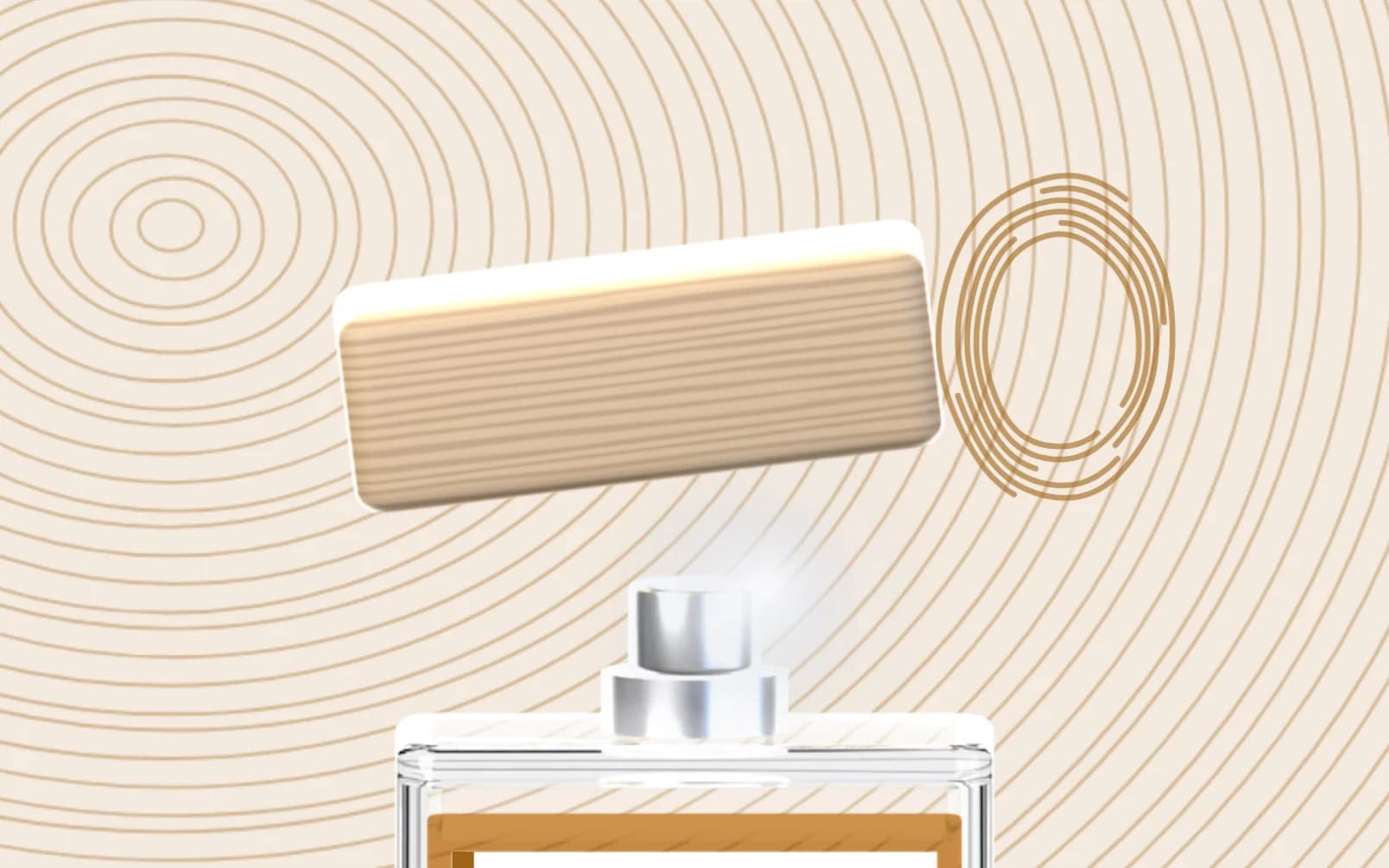
- The real bottle, rendered. Each scent shows the real bottle with its own label and liquid colour. Hovered or pressed, the oak cap lifts, it sprays, and the mist leaves the family's print. The product photos stay real.
- Motion with a meaning. A scent rises from the bottle and becomes the logo's ridges, the visitor's answers draw their print, and a finished batch is sealed. Every page respects reduced motion.
- A back office. Scents and their families, batches and their ageing, stock in millilitres, and orders from confirming to delivery, with a sign-in and a role for each person.
How
We wrote the plan before any code: the concept, every page, the finder's rules, the words in both languages, and the identity with its motion. Then we built the shop, the back office and the API from scratch, in three parts. The shop and the back office are Next.js, and only their servers call the API, which is NestJS on PostgreSQL. The bottle is rendered in Blender from the real bottle's proportions, and its story runs in CSS, so a card sends no script.
The result
Scentera sells from its own shop, in Arabic and English, where before it sold only through messages.
Our role
We planned and built it: the identity, the shop, the back office and the API.